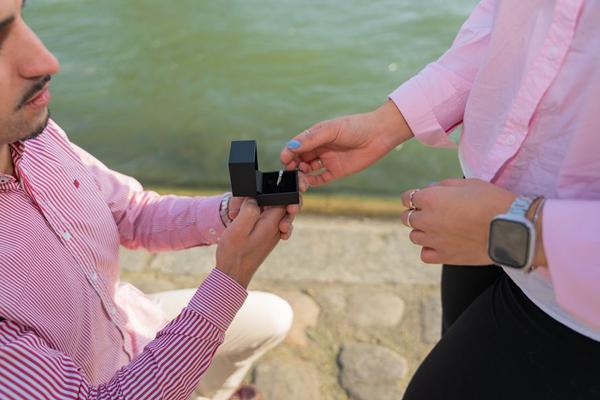

A proposal happens in seconds, but the story around it is much bigger than the moment someone gets down on one knee. The best proposal photos capture anticipation, surprise, emotion, the ring, and the first few minutes of being engaged. A thoughtful proposal photo checklist helps a professional photographer or trusted friend document the sequence without turning a genuine moment into a staged shoot.
Before the question: capture the build-up
1. The location before anyone arrives
Start with a scene-setting image of the proposal spot before the couple enters. It gives the gallery a clear beginning and establishes where the story unfolded.
2. The hidden ring detail
Take a close-up of the ring in its box before the proposal if it can be done discreetly. Use natural light and a simple background so the ring remains the focus.
3. The proposer waiting
Capture the nervous pause before the partner arrives: checking the time, holding flowers, or taking a steadying breath. These candid proposal shots often show emotion the other person never saw.
4. The partner approaching
Photograph the arrival from a distance if the setup allows it. A wide frame of one partner approaching while the other waits adds suspense and creates a natural transition into the proposal.
The proposal itself: photograph the sequence
5. The first moment of recognition
Watch for the instant the partner realizes something unusual is happening. Their expression may change before the ring appears, and that split-second reaction can be more powerful than a posed portrait later.
6. The kneeling moment
Frame both people clearly when the proposer gets down on one knee. Show some of the setting while staying close enough to capture faces. A short burst can help because expressions change quickly.
7. The full reaction
Once the question is asked, focus on the partner receiving the proposal. Hands over the mouth, laughter, tears, or disbelief all make meaningful engagement moment photos. Avoid interrupting or asking for a repeated reaction.
8. The ring being presented
Capture the open box or ring held between the couple. Include hands or part of the couple so the image preserves the context of the real event.
9. The answer
The yes may be a nod, laugh, embrace, or spoken words. Photograph the moment immediately after the question rather than trying to predict one exact gesture. The emotional response matters more than a perfect pose.
10. The ring going on the finger
A ring reveal photo feels most meaningful when it shows the ring being placed rather than only the finished result. Focus on the hands, then take a wider version so the couple’s expressions remain part of the story.
11. The first hug
Do not lower the camera after the ring goes on. The first hug often contains the release of all the tension that came before it. Photograph it from a respectful distance so the couple can stay present.
12. The first kiss after the yes
If the couple naturally kisses, capture it without directing them. A medium or wide composition often feels more authentic because the surroundings help establish that this was the actual proposal.
Right after the proposal: document the celebration
13. The look at the ring
Photograph the newly engaged partner when they finally pause to inspect the ring. Try to include their face and hand together. The mix of surprise and curiosity gives this frame a different feeling from a formal close-up.
14. Both hands together
Ask for this only after the spontaneous reaction has settled. A simple image of the couple holding hands can show the engagement ring naturally while still feeling connected and personal.
15. The just-engaged portrait
Take one relaxed portrait with both people looking at the camera. It is useful for announcements and family messages. Keep the posing simple so it matches the candid images.
16. A walking-away photo
Have the couple walk together for a minute instead of immediately starting a formal session. Photograph them talking, laughing, or looking at each other. Movement helps people relax after an intense moment.
17. The celebratory detail
If the proposal includes flowers, champagne, a handwritten letter, a picnic, candles, or another personal element, photograph it before it is packed away. These details show the planning behind the moment and add variety.
18. The phone-call reaction
Many couples call parents, siblings, or close friends soon after getting engaged. With permission, capture the smiles, tears, and excited gestures during that first call. It adds a real-world chapter beyond the proposal itself.
19. A wider environmental portrait
Step back and include the full setting once the pressure is off. At a sunset overlook, for example, place the couple small in the frame with the landscape around them to create a strong sense of place.
20. The final close-up of the ring
Finish with a polished ring image on the hand. Look for soft light, a clean background, and relaxed fingers. This closing detail complements the earlier image of the ring before the question.
How to make the photo plan work in real life
For a surprise proposal, preparation matters more than complicated gear. Agree on the standing point, arrival route, backup position, and a simple signal in advance. In a busy park, choose a clear landmark such as a bench or tree where the proposer will stop so the photographer does not lose the couple in the crowd.
A DIY documenter can use the same approach. Test the camera angle, clean the lens, check battery and storage, and keep the camera close enough to show faces. If using a phone on a tripod, recording video as a backup can preserve a missed still moment.
Natural next reads for couples planning the wider story include engagement announcement ideas, how to tell your proposal story, and what to wear for engagement photos.
Frequently asked questions
How many proposal photos should you plan for?
There is no required total, but a strong gallery should cover the build-up, the question, the immediate reaction, and a few post-proposal portraits. A concise shot plan is better than dozens of nearly identical images.
Should proposal photos be posed?
The proposal itself should usually be documented as it happens. After the couple has enjoyed the moment, a few lightly directed portraits can add useful variety without making the event feel staged.
Where should a proposal photographer stand?
The photographer should be close enough to capture expressions but far enough away to avoid revealing the surprise. Position depends on the location, light, background, and direction the couple will face.
What if the proposal happens in low light?
Choose the brightest practical spot, stabilize the camera, and avoid harsh direct flash during the surprise unless it has been planned. Scheduling the proposal slightly earlier can also preserve some natural light.
Capture the story, not just the ring
The most memorable proposal gallery feels like a sequence rather than a set of isolated poses. Start with the setting and anticipation, stay alert through the question and reaction, then document the first minutes of celebration. Used as a flexible guide rather than a rigid script, these 20 proposal story photo ideas can produce images that feel personal, emotional, and true to the couple.