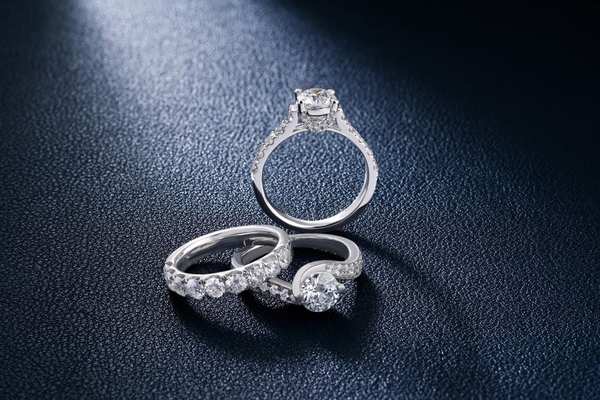

Choosing between moissanite and diamond is less about finding a “correct” engagement-ring stone and more about deciding which qualities matter most to you. Both can look bright, elegant and suitable for everyday wear, but they create different visual effects and sit in very different price categories. If you are comparing a moissanite vs diamond engagement ring, focus on sparkle, durability, cost and which appearance feels right on your hand.
Moissanite and Diamond Are Different Stones
Moissanite is silicon carbide, while diamond is crystalline carbon. Gem-quality moissanite sold for jewellery is laboratory-created, whereas diamonds are available as both natural and laboratory-grown stones. Moissanite is therefore a diamond alternative rather than a type of diamond.
The difference shows most clearly in how they handle light. A well-cut diamond is prized for its balance of brightness, fire and contrast. Moissanite has higher dispersion, so it produces stronger rainbow flashes. Some people love that lively, colourful sparkle; others prefer the sharper, more familiar look of a diamond.
Sparkle: Which One Looks More Brilliant?
Moissanite is exceptionally sparkly. Its optical properties can create more visible fire than diamond, especially under spotlights or direct sunlight. In larger stones, those rainbow flashes may become very noticeable. Diamond also shows fire, but its sparkle tends to combine white light, coloured flashes and darker contrast in the classic pattern many buyers expect from an engagement ring.
Neither effect is automatically better. Compare both stones away from jewellery-store spotlights: beside a window, under ordinary indoor lighting and outdoors. This often reveals your preference faster than photographs do. Our diamond cut guide is also worth exploring because cut quality strongly influences how lively a diamond appears.
Moissanite vs Diamond Price
Price is one of the biggest differences. A moissanite engagement ring can offer a large-looking centre stone for considerably less than a comparable natural diamond, leaving more of the budget for the setting, wedding bands or other priorities.
Diamond pricing varies with carat weight, cut, colour and clarity, as well as whether the stone is natural or laboratory-grown. Lab-grown diamonds are still diamonds in their chemical and physical properties, but they generally cost less than comparable natural diamonds. Moissanite usually remains the lower-cost choice when size and visual impact are the main goals.
Consider two couples who both want a prominent oval centre stone. One may spend more for a natural diamond because its origin and tradition matter to them. Another may choose moissanite, keep similar visual presence and put the savings towards a platinum setting. Both choices can make sense because they reflect different priorities.
Durability for Everyday Wear
Engagement rings face desks, door handles, gym equipment and countless small knocks, so durability matters. Diamond ranks 10 on the Mohs scale of hardness, making it the most scratch-resistant gemstone. Moissanite is also extremely hard, at about 9.25, giving moissanite durability that is well suited to everyday jewellery.
Hardness describes scratch resistance; it does not mean a diamond cannot chip. A hard blow at a vulnerable edge can damage one, particularly around pointed corners or a thin girdle. Settings still matter for both stones. If you work with your hands frequently, a bezel or well-protected prong design may offer extra security. Our engagement ring settings guide can help you compare protective designs.
Colour, Clarity and Visual Character
Diamonds are graded for colour and clarity, and small differences can have a major effect on price. Colourless and near-colourless stones are popular, although warmer diamonds can pair beautifully with yellow or rose gold.
Modern moissanite is commonly available in colourless or near-colourless grades. Depending on the stone, lighting and viewing angle, a faint warm, grey or greenish cast may sometimes be visible. Moissanite is also doubly refractive, which can make facet edges look slightly doubled when viewed closely.
Size and Face-Up Appearance
Moissanite is often compared with diamonds using millimetre measurements or “diamond equivalent weight” because it weighs less than diamond for the same face-up dimensions. When shopping, compare measurements rather than carat labels alone. A stone’s shape matters too: oval, pear and marquise cuts can create greater finger coverage than some round stones of similar weight.
Care and Maintenance
Both stones collect oil, soap and lotion, which can dull sparkle even when the gemstone is undamaged. Gentle cleaning with warm water, mild dish soap and a soft brush works for routine care in many settings. Have prongs checked periodically, and remove the ring for activities where impact, pressure or loss is more likely.
Our engagement ring care guide can help you build a maintenance routine that protects the whole ring, not just the centre stone.
Which Stone Fits Your Priorities?
Choose moissanite if…
You want maximum visual size for the budget, enjoy strong rainbow fire and are comfortable choosing a laboratory-created diamond alternative. It suits buyers who would rather put more money into the setting or another goal without giving up a bright, durable centre stone.
Choose diamond if…
You prefer the traditional diamond appearance, value its cultural symbolism or specifically want a natural gemstone. A lab-grown diamond can also suit someone who wants the optical and material properties of diamond at a different price point from natural diamond.
Frequently Asked Questions
Can most people tell moissanite from diamond?
Not always at a quick glance, especially in smaller stones, but the difference can become more apparent under certain lighting. Moissanite often shows stronger rainbow flashes, and gem professionals can distinguish the materials with appropriate testing.
Does moissanite get cloudy over time?
Moissanite does not normally become permanently cloudy simply from age. Like diamond, it can look dull when oils, soap or cosmetic residue build up on the surface. Regular cleaning usually restores its sparkle.
Is moissanite durable enough for an engagement ring?
Yes. With a Mohs hardness of about 9.25, moissanite has excellent scratch resistance and is well suited to regular wear. The stone and setting should still be protected from hard impacts.
Is a diamond always the better long-term choice?
No. “Better” depends on what you expect from the ring. Diamond offers tradition, a familiar visual character and the option of natural origin. Moissanite offers greater size for the budget and distinctive fire. Satisfaction is more likely when the stone’s appearance, cost and meaning match your priorities.
Making the Final Choice
The best comparison happens in person. Set a realistic budget, compare stones of similar face-up size and view them in several lighting conditions. Then pay attention to your immediate reaction: do you prefer moissanite’s colourful fire or diamond’s classic pattern of brilliance and contrast?
Moissanite delivers impressive durability and value, while diamond offers unmatched scratch resistance and enduring traditional appeal. Choose the one you will enjoy seeing every day, rather than the one you feel you are supposed to choose.