
The fabric of a wedding dress does far more than determine how it feels under your fingertips. It affects shape, movement, photographs, and comfort through hours of standing, sitting, and dancing. Two gowns with the same silhouette can look completely different when one is cut in fluid crepe and the other in crisp mikado.
A useful wedding dress fabric guide goes beyond “soft” or “luxurious.” Ask instead: Does the fabric skim or stand away from the body? Is the surface matte or reflective? Does it need layers to create volume? How does it behave when you walk? Those differences make bridal fabrics easier to compare.
Start With Drape, Structure, and Surface
Drape describes how easily a material falls and follows the body. Structure describes how well it holds a defined shape. Surface describes what you see, from gloss and grain to embroidered texture. A fabric name also does not always tell you its fiber content. Satin, for example, refers to a weave and may be made from silk, polyester, acetate, or blends, so two satin gowns can differ in weight, sheen, feel, and price.
Satin: Smooth, Polished, and Light-Reflective
Satin is known for its smooth face and elegant sheen. Depending on its weight, it can range from fluid to substantial enough for a dramatic ball gown. Heavier bridal satins create clean folds and a formal finish, while lighter versions move closer to the body.
A satin wedding dress works well if you like an uncluttered silhouette where tailoring does most of the visual work. Because the surface reflects light, check the gown under both boutique lighting and natural light if possible. A satin that looks softly luminous indoors may appear brighter in flash photography.
Crepe: Fluid, Modern, and Usually Matte
Crepe is popular for streamlined gowns because its lightly textured surface usually looks more matte than satin. Many bridal crepes drape well and suit sheath, column, fit-and-flare, and minimalist designs. A crepe wedding dress can feel simple from a distance while showing subtle texture up close.
Fluid crepe may reveal what sits beneath it more readily than a structured fabric. Seams, shapewear edges, and lining choices can influence the finished look, so ask how the gown will be supported and lined rather than judging the outer layer alone.
Chiffon: Airy Movement With Very Little Bulk
Chiffon is lightweight, sheer, and soft in motion. Bridal gowns generally use it in layers or over an opaque lining. It is especially effective for skirts designed to flutter and drape rather than hold a sculpted shape.
Chiffon often suits warm-weather or destination weddings visually, but comfort still depends on the lining, sleeves, boning, and number of layers. Its delicate surface can snag, so take care around rough jewelry, stone walls, and textured outdoor seating.
Tulle: Volume Without a Dense Look
Tulle is a fine netting used for skirts, overlays, veils, sleeves, and illusion details. It can be very soft or relatively firm. That is why one tulle wedding dress may look cloudlike while another has a fuller, more architectural skirt.
Layers of tulle can create considerable volume without the solid visual weight of a heavy woven fabric. If you love a full skirt, compare how many layers a gown uses and whether the outer layer is soft, glittered, embroidered, or plain.
Organza: Sheer Like Chiffon, Crisper in Shape
Organza is also sheer, but it generally has more crispness and body than chiffon. It can hold folds, ruffles, and fuller shapes while still letting light pass through its layers. The result is airy but more defined, making organza useful when you want both volume and movement.
Mikado: Clean Structure With a Refined Sheen
Mikado is a substantial bridal fabric often used when a gown needs strong shape. It works well for crisp A-line skirts, ball gowns, pleating, bows, and other details that benefit from structure. Its smooth finish usually has a restrained luster rather than a highly reflective shine.
Because mikado has body, it can create a polished silhouette with minimal embellishment. It may also feel warmer and less floaty than chiffon or tulle. Still, season is not determined by fabric alone; sleeve coverage, lining, corsetry, and venue conditions all matter.
Lace: Texture and Pattern Take the Lead
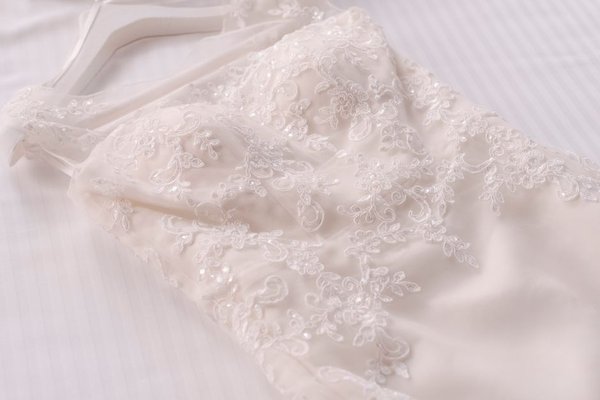
Lace varies more than many brides expect. Some styles are fine and delicate, while others use dense motifs, raised corded details, or bold florals. Lace may cover an entire gown or appear only on the bodice, sleeves, or an overlay.
When comparing lace gowns, step back as well as looking closely. A motif that seems beautiful at arm’s length can form a very different pattern in full-length photographs. Also check where textured lace touches the skin, especially around straps, necklines, and armholes.
Use a Movement Test in the Fitting Room
Do not judge fabric only while standing in front of a mirror. Ask someone to take a short phone video while you walk, turn, sit, and take several normal steps. Watch how the hem responds, whether the skirt swings or stays crisp, how the surface catches light, and whether you keep adjusting the gown.
For example, a bride choosing between a crepe sheath and a mikado A-line may prefer the softness of crepe on the hanger but discover that mikado gives her the defined waist and dramatic movement she wants for a ballroom entrance. Another bride may find crepe feels more natural for a small city ceremony. Motion often makes the difference clearer than touch alone.
It can also help to compare a wedding dress silhouette guide, wedding dress train lengths, and a bridal alterations timeline while narrowing your choice, because fabric works together with the cut and construction of the gown.
Frequently Asked Questions
Which wedding dress fabric is best for hot weather?
Lightweight chiffon, soft tulle, and some lightweight crepes can create an airy effect, but there is no single best option. Lining, sleeve coverage, corsetry, embellishment, and the number of layers can matter as much as the outer fabric.
Which bridal fabric holds shape best?
Substantial mikado and heavier satin are common choices for crisp folds, defined skirts, and architectural details. Firmer tulle and organza can also create volume, especially when layered.
Does crepe cling more than satin?
It can, particularly when the crepe is fluid and the satin is heavier. Fabric weight, lining, seam construction, and fit are better predictors than the fabric name alone.
Is lace suitable for every season?
Yes, because lace varies widely. A light lace layer over tulle can feel visually airy, while dense lace over a substantial lining looks richer. Judge the complete construction rather than the lace motif alone.
Choosing the Fabric That Matches the Dress
The best fabric is the one that supports the way you want your gown to look and move. Satin brings polish, crepe offers fluid simplicity, chiffon creates soft movement, tulle builds airy volume, organza adds crisp lightness, mikado holds sculpted shapes, and lace supplies texture. Compare them in motion, under realistic lighting, and with the gown’s full lining and structure. When fabric, silhouette, and setting work together, the dress is more likely to feel right from every angle.