
A bridesmaid dress chosen in January might need to fit a very different body by a June wedding. That is the practical challenge with maternity bridesmaid dresses: the outfit has to suit the celebration, feel comfortable for hours, and leave room for changes that are difficult to predict months ahead. The good news is that coordinating a pregnant bridesmaid with the rest of the wedding party does not require identical cuts or a last-minute scramble.
Start With the Wedding Date, Not Today’s Measurements
Before shopping, work out approximately how far along the bridesmaid will be on the wedding day. Someone who is eight weeks pregnant when dresses are ordered could be well into the second trimester by the ceremony. Current measurements are useful, but they cannot guarantee a future fit.
Ask the retailer which styles are designed specifically for pregnancy, which are merely described as bump-friendly, and how their sizing recommendations change by trimester. These are not interchangeable labels. A flowing regular dress may work beautifully early on, while a maternity pattern can provide more considered room through the bust, ribcage, and abdomen later in pregnancy.
For example, imagine a bridesmaid attending an outdoor wedding at 30 weeks pregnant. A rigid, fitted satin gown ordered in her usual size could become uncomfortable, even if the hem is perfect. An adjustable empire-waist style in the same wedding color gives her more flexibility without changing the overall look.
Choose a Silhouette That Leaves Room to Grow
Empire waist and flowing A-line styles
An empire waist bridesmaid dress places its waist seam just below the bust rather than across the abdomen. Fabric then falls over the bump instead of pulling tightly around it. This is often a reassuring choice for someone whose shape is still changing, especially when the skirt is generously cut.
A-line dresses can work too, but inspect where the fitted section ends. An A-line label alone does not promise enough abdominal room. Look for a raised waist, a relaxed skirt, and a bodice that can accommodate bust changes. A dress that looks loose on a model may feel quite different when seated.
Wrap, adjustable, and convertible designs
Adjustable straps, tie details, and carefully designed wrap styles give pregnant bridesmaids more control over the fit. However, a wrap opening needs enough coverage to stay secure while walking, sitting, or bending. Check whether a dress has a practical fastening rather than relying solely on a decorative tie.
Fabric Makes a Difference Beyond Appearance
Soft chiffon is popular for pregnant bridesmaid dresses because it drapes gently, although chiffon itself usually offers little stretch. The lining and construction matter just as much as the outer layer. Stretch jersey, soft mesh, and flexible knit fabrics can move more easily with the body, while heavy or stiff materials may feel restrictive over a long day.
Get Pregnancy Bridesmaid Sizing Right
There is no reliable universal rule that every pregnant bridesmaid should buy exactly one or two sizes larger. Retailers use different size charts, and dedicated maternity dresses may already include additional space. Always follow the measurements and pregnancy guidance for the specific design rather than guessing from a usual clothing size.
Measure the bust, underbust, and other points requested by the brand while wearing suitable undergarments. Some maternity retailers also ask for a belly measurement and hollow-to-floor length. Do not add extra inches to custom measurements unless the seller specifically requests it; maternity patterns may already account for growing room.
If measurements fall between standard sizes, ask whether ordering the larger size and taking in the bodice later is sensible. Letting out a finished dress depends on available seam allowance, so it may be impossible. Keep the receipt, check exchange terms, and avoid making irreversible alterations too early.
Order Early, but Schedule the Final Fit Later
Order timing depends on whether a gown is ready to ship, made to order, or custom made. Some brands recommend shopping several months before the wedding, with longer lead times for made-to-order pieces. Confirm production, shipping, return policies, and possible alteration costs before committing.
Book an experienced alterations professional in advance, then discuss a fitting schedule that accounts for pregnancy. A preliminary appointment can identify structural problems, but the final fit check is most useful closer to the event. Leave enough time for small adjustments and avoid assuming a seamstress can rebuild a restrictive dress at short notice.
Remember that a growing bump can lift the front hem. At the final fitting, wear the planned shoes and undergarments, stand, walk, and sit. This helps the tailor judge the finished length and check whether the bodice remains comfortable in ordinary movement.
Coordinate the Wedding Party Without Requiring Identical Dresses
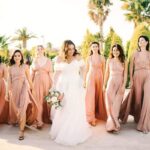
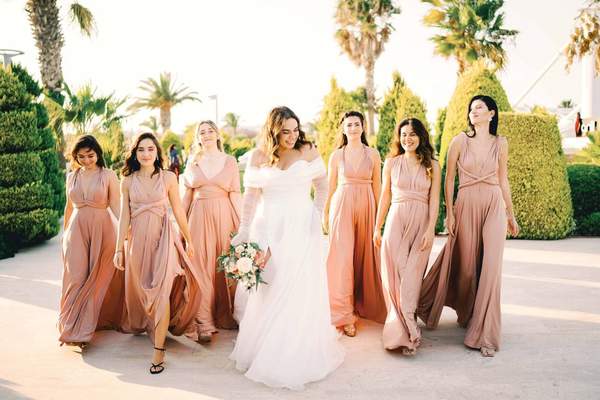
Matching color, fabric family, or overall length often creates a more cohesive photograph than insisting every person wear the same silhouette. A pregnant bridesmaid can wear a maternity-specific dress while others choose conventional designs from the same collection. Request fabric swatches because colors with identical names can vary between retailers and materials.
If the bride prefers a mixed-style lineup, agree on two or three common details such as color, neckline formality, or skirt length. Our guide to bridesmaid dress color combinations can help with palettes, while a mismatched bridesmaid dresses guide can offer inspiration for varied silhouettes. For a more cohesive finish, use a wedding party accessories guide when choosing jewelry or wraps.
Test Comfort Before the Ceremony
During a fitting, do more than look in the mirror. Try sitting for several minutes, raising your arms, using stairs, and checking whether the dress can be adjusted easily for bathroom visits. Test the neckline with a supportive bra, and consider footwear suited to the venue and the amount of standing involved.
Frequently Asked Questions
Can a pregnant bridesmaid wear the same dress as everyone else?
Yes, if that particular dress has enough room and feels comfortable at the stage of pregnancy expected on the wedding day. Otherwise, a maternity version in the same color or fabric is often the better option.
Are empire waist bridesmaid dresses suitable for later pregnancy?
Often, yes. Their raised seam avoids placing a tight waistband over the bump, but the bust fit, skirt fullness, lining, and individual design still need checking.
When should maternity bridesmaid dress alterations happen?
Arrange a tailor early, then plan the final fit check nearer the wedding. The exact schedule depends on the dress construction, how quickly the fit is changing, and the tailor’s availability.
Should I order my pre-pregnancy dress size?
Not automatically. Review the brand’s maternity size chart and contact its fit team with your measurements and expected pregnancy stage. Standard and maternity styles can follow different sizing rules.
Comfortable, Coordinated, and Ready for the Day
The most successful maternity bridesmaid dresses balance flexibility with the wedding’s visual style. Choose the silhouette for the body that will wear it on the day, verify the maker’s sizing guidance, and give alterations a sensible schedule. A comfortable bridesmaid is free to focus on the celebration rather than adjusting her dress throughout it.