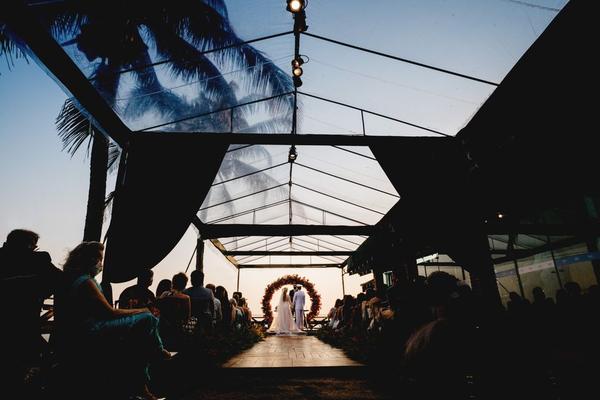

A wedding for 150 guests is large enough that small per-person decisions become big totals. Treating the guest list as just one spreadsheet line is a mistake because attendance affects food, drinks, rentals, invitations, staffing, transport, and sometimes the venue itself.
The best way to build a wedding budget for 150 guests is to separate expenses into two groups: costs that rise with attendance and costs that stay mostly fixed. Once you see that split, it becomes easier to decide where savings will have the greatest effect.
Start With a Per-Guest Budget
Set your maximum total budget first, then reserve money for mostly fixed expenses such as photography, attire, entertainment, ceremony fees, and certain décor. The remaining amount becomes the working pool for guest-driven costs.
For example, suppose a couple has a $30,000 reception budget and expects $12,000 to go toward fixed or mostly fixed items. That leaves $18,000 for costs connected to 150 attendees, or $120 per guest. That $120 may need to cover food, drinks, rentals, staffing, stationery, transport, taxes, and service charges, not just the meal.
This quick calculation can reveal problems before deposits are paid. If the venue and catering already use most of the allowance, the rest of the plan needs to stay restrained. A wedding budget breakdown guide can help you separate the major categories before requesting quotes.
Food and Drink Can Dominate the Variable Cost
When estimating a 150 guest wedding cost, catering is usually the first number people consider. However, the quoted meal rate may not include everything. Ask whether staffing, tableware, glassware, linens, cake cutting, service fees, gratuities, and taxes are included or charged separately.
The bar deserves its own calculation. Packages may be priced per person, by consumption, or through a mix of beverage charges and bartender fees. Compare vendors using the same guest count and event length so the numbers are genuinely comparable.
Model the Full Cost Before Signing
Multiply every per-person charge by 150, then add fixed and percentage-based fees separately. If food is quoted at $85 per guest, the base food total is $12,750 before any separate tax, service, staffing, rental, or beverage charges. A useful guest count budget keeps those additions visible instead of hiding them in one rough estimate.
A Larger Guest List Can Change the Venue
The wedding cost for 150 people may jump if your preferred venue cannot comfortably handle that number. Capacity should mean more than fitting 150 chairs. Ask whether the stated limit still works with a dance floor, DJ or band area, buffet stations, bars, gift tables, accessible pathways, and service space.
A bigger room can create secondary costs too. You may need more décor, additional sound coverage, more restroom capacity at an outdoor site, or extra transportation between hotels and the venue. These are not strictly per-person expenses, but they can appear because the guest list crossed a practical threshold. A wedding venue cost checklist is useful for comparing the total package instead of the rental fee alone.
Tables, Rentals, and Staffing Often Rise in Blocks
Some costs do not increase one guest at a time. They rise in chunks. Adding eight or ten people might require another table, linen, centerpiece, set of place settings, and possibly another server. That is why the last few guests can affect a large wedding budget more than expected.
Ask vendors how staffing changes at different attendance levels. Do the same for bartenders, security, valet service, shuttle vehicles, and restroom facilities. An actionable way to manage this is to keep three attendance figures in your spreadsheet: invited, expected, and confirmed. Update the confirmed figure as RSVPs arrive so you can see which expenses may still change.
Budget for Invitations, Transport, and Small Extras
Stationery may look minor beside catering, but a 150-person event can involve invitations, postage, place cards, menus, programs, and thank-you cards. Remember that invitation quantity is based on households, while many reception items are based on individual guests.
Transportation can also change with attendance. If many guests stay in one area, shuttle service may be useful, but price it by vehicle capacity and number of runs rather than assuming one bus will be enough.
Small extras add up quickly. A $4 favor or late-night snack becomes $600 across 150 guests. That does not mean every extra should be removed; it means each should be evaluated at the full guest count.
Protect the Plan With a Contingency
Do not allocate every available dollar immediately. Quotes can change, attendance can shift, and final invoices may include adjustments. Keep a contingency line based on the uncertainty in your contracts and plans.
Review minimum spends, overtime rules, staffing requirements, service charges, cancellation terms, and final guest-count deadlines. A wedding vendor contract checklist can help you identify which numbers can still move and when they become locked in.
Cut Costs Where Multiplication Works in Your Favor
If the total is too high, start with expenses multiplied by 150. Reducing a per-person cost by $10 saves $1,500 across the full guest list, while cutting $100 from one fixed décor item saves only $100.
Possible adjustments include simplifying the menu, choosing a less complex bar package, reducing printed extras, or selecting a venue that includes tables, chairs, and basic rentals. You can also revisit the guest list, because a lower headcount may reduce several connected costs at once.
Frequently Asked Questions
How much should I budget for a wedding with 150 guests?
There is no reliable universal total because venue prices, catering rates, labor costs, taxes, and service charges vary by location and vendor. Build your estimate from actual quotes, separate fixed from per-person expenses, and calculate guest-driven costs at the full 150-person level.
Which costs rise most with 150 guests?
Food, beverages, rentals, place settings, stationery, staffing, favors, and some transportation costs commonly rise with attendance. Venue requirements may also change if the larger headcount needs a bigger room or more infrastructure.
Should I budget for all 150 invited guests?
For early planning, using the full invited count is a sensible stress test unless reliable RSVP data or contract terms justify a different figure. It helps prevent a budget shortfall if attendance is higher than expected.
What is the fastest way to reduce the budget?
Focus first on per-person costs. Even a modest reduction in catering, bar, rentals, or extras can create meaningful savings when multiplied across 150 people. Then review guest-count thresholds that may allow fewer tables, staff, or transport vehicles.
Build the Budget Around the Guest List
A wedding for 150 people becomes easier to manage when every cost is connected to how it behaves. Fixed expenses can be reviewed once, while variable costs should be multiplied by the full guest count and checked again as RSVPs arrive. Threshold expenses such as extra tables, servers, rooms, or shuttles deserve special attention.
By building your wedding budget for 150 guests from real vendor quotes, separating charges clearly, and testing the plan at full attendance, you get a more useful picture than any single average-cost figure can provide. That makes it easier to spend on the parts that matter most while cutting where the savings have the biggest impact.