Fall bridesmaid dresses should look beautiful against turning leaves, candlelit receptions, and harvest-inspired flowers, but also feel comfortable when a sunny afternoon becomes a chilly evening. The most successful autumn wedding-party looks consider color, fabric, movement, and temperature together.
That does not mean every bridesmaid needs burgundy velvet. From muted neutrals to polished satin and modern sleeves, seasonal styling can feel personal rather than predictable.
Choose Fall Bridesmaid Dress Colors for the Setting
Autumn palettes work best when they complement the ceremony backdrop, floral arrangements, and lighting. An earthy shade that glows in afternoon sunlight may look darker during an indoor reception, so view samples in different conditions.
Rust, Terracotta, and Copper
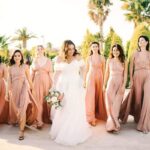
Rust and terracotta are especially effective at garden, vineyard, and barn weddings. They pair with cream flowers, olive greenery, and gold accents. For a softer lineup, combine burnt orange with muted cinnamon and warm rose instead of choosing identical dresses.
Burgundy, Plum, and Chocolate
Wine red and plum are dramatic alternatives to black, particularly for formal celebrations. Chocolate brown creates a rich effect without competing with colorful bouquets. At venues with dark wood or brick, use lighter floral accents to give darker gowns definition in photographs.
Sage, Olive, and Forest Green
Green is versatile among fall wedding party colors. Sage suits early September, olive bridges rustic and refined themes, and forest green feels at home in candlelit venues. Watch undertones: yellow-based olive and blue-based green can clash unless the palette deliberately includes both.
Dusty Blue and Mauve
Autumn bridesmaid dresses need not mimic fallen leaves. Dusty blue and muted mauve feel seasonal with warm florals, bronze accessories, or textured ribbons. They suit couples seeking a romantic look rather than a traditional harvest palette.
Match Fall Dress Fabrics to the Weather
Fabric affects drape, warmth, wrinkles, and photography. Order physical swatches where possible because the same shade can look matte in crepe, reflective in satin, and deeper in velvet. These differences matter when dresses appear side by side.
Velvet for Rich Texture
Velvet adds depth to emerald, plum, navy, and burgundy dresses. Its substantial feel suits cooler evenings, particularly later in the season. However, velvet is not ideal for every fall wedding: a sunny outdoor ceremony may still be warm. Check weight, lining, and stretch before ordering.
Satin for a Polished Finish
Satin catches light beautifully, elevating simple silhouettes. It works well for formal seasonal bridesmaid gowns. Smooth satin can also reveal wrinkles, water marks, and fit issues more readily than textured fabrics, so consider a structured version if bridesmaids prefer less cling.
Crepe and Chiffon for Flexibility
Crepe offers a refined matte finish for minimalist wedding parties. Chiffon is ideal for mild early-fall days, when flowing skirts and lighter layers feel appropriate. Mixing crepe with satin within one color family can look intentional, provided the undertones coordinate.
Find Sleeves, Necklines, and Lengths That Work
Long sleeves are romantic, but sleeveless gowns with planned wraps can adapt more easily to changing temperatures. Flutter sleeves soften structured fabrics, square necklines suit modern styling, and higher necklines lend polish to simple crepe designs.
Floor-length gowns are generally a safe choice for formal evening weddings, while midi dresses suit relaxed daytime ceremonies. Consider the ground underfoot: an ankle-length hem may be easier to handle on damp grass than a train dragging through leaves.
Ask each bridesmaid to sit, walk, lift her arms, and dance while trying on dresses. A sleeve that restricts movement or a skirt that catches beneath heels becomes uncomfortable over a long celebration. Flattering photographs are only part of the decision.
Plan for an Afternoon Ceremony and a Cool Evening
One of the smartest fall styling strategies is to plan separately for the ceremony and reception. Imagine an October wedding with outdoor portraits at 3 p.m. and cocktails in a courtyard after sunset. Lightweight satin may be comfortable during photographs, but a coordinated wrap could make the later gathering far more pleasant.
Check typical local weather, the forecast near the date, and whether portraits involve standing on wet ground. Choose shawls, pashminas, or tailored jackets before the wedding week. Confirm whether layers should appear in group photographs; matching wraps look uniform, while related neutral shades allow individuality.
For cold destinations, discreet thermal layers may help if they fit smoothly under the dress. For rainy locations, arrange an indoor photography backup and avoid delicate hems that brush muddy pathways.
Finish the Look With Shoes, Bouquets, and Jewelry
Shoes need to suit the gown and the venue. Block heels, supportive flats, and low heels are easier on lawns, gravel, and uneven paths than narrow stilettos. Champagne, bronze, soft gold, and dark neutrals complement many autumn colors.
Bouquets link bridesmaid dresses to the wider wedding design. Rust dresses feel fresh beside ivory flowers and eucalyptus; forest green gains contrast from cream blooms and muted peach accents. Gold jewelry often enhances warm earth tones, while silver or pearls brighten cooler blue and mauve palettes.
Make Mismatched Dresses Look Deliberate
Mismatched bridesmaid dresses are appealing in autumn because related colors and textures offer variety. Control a few elements: choose one color family with different necklines, or two or three approved shades in a consistent length and formality.
For example, a five-person wedding party could wear two terracotta dresses, two cinnamon dresses, and one muted rose dress, all floor-length. Arrange physical fabric swatches beside the bouquets in daylight. This can reveal subtle clashes that a digital inspiration board misses.
For related inspiration, explore bridesmaid dress color combinations, a bridesmaid dress fabrics guide, and wedding party shoe ideas.
Order Early and Budget for the Whole Outfit
Made-to-order dresses may need considerable lead time, especially when multiple bridesmaids want matching shades. Confirm production and shipping estimates with the retailer, then allow time for alterations or returns. When an exact match matters, ask about ordering together to limit dye-lot differences.
Agree on a budget that includes shoes, alterations, undergarments, and layers. A reasonably priced dress can become expensive once the extras are added.
Frequently Asked Questions
What colors are best for fall bridesmaid dresses?
Rust, terracotta, burgundy, olive, forest green, plum, and chocolate are classic choices. Dusty blue and mauve also suit autumn weddings when paired with seasonal florals.
Is velvet too warm for a fall wedding?
It depends on the location, fabric weight, and schedule. Velvet suits cool evenings but may feel uncomfortable during a warm afternoon ceremony.
Can bridesmaids wear chiffon in autumn?
Yes. Chiffon works beautifully in mild weather, especially for early-fall weddings. Add coordinated layers if the evening is likely to be cooler.
Do bridesmaid dresses have to match exactly?
No. A cohesive palette with a consistent level of formality can look just as polished. Compare real swatches to avoid unexpected undertone differences.
A Thoughtful Look for the Whole Celebration
The best fall bridesmaid dresses combine a considered palette with practical decisions about fabric, fit, and changing weather. Choose colors that suit the setting, make movement comfortable, and plan layers in advance. The result will feel autumnal in photographs and work throughout the wedding day.