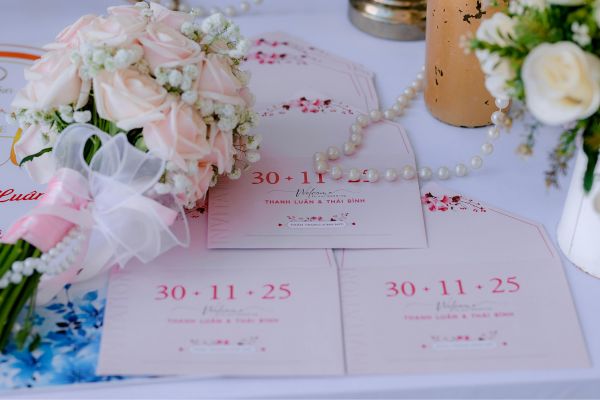

Wedding invitations carry more meaning than most people realize at first. They are practical, of course. Guests need to know the date, time, location, and what kind of celebration they are being invited to attend. But invitations also set the emotional tone for the wedding. They quietly tell guests whether the day will be formal, relaxed, traditional, intimate, modern, or somewhere in between.
That is why wedding invitation etiquette still matters. It is not about following stiff rules simply because they have always existed. Good etiquette is really about clarity, kindness, and avoiding awkward misunderstandings before the wedding day arrives. The best invitations make guests feel included, informed, and comfortable.
Understanding wedding invitation etiquette dos and donts can help couples create invitations that feel polished without becoming overly formal. The goal is not perfection. It is thoughtfulness. A well-worded invitation answers important questions before guests need to ask them and keeps the focus where it belongs: on the celebration.
Do Send Invitations at the Right Time
Timing is one of the most important parts of invitation etiquette. Send invitations too early, and guests may set them aside and forget to respond. Send them too late, and people may struggle to arrange travel, childcare, time off work, or accommodations.
For most weddings, invitations are usually sent around six to eight weeks before the wedding date. If the wedding is a destination event or many guests are traveling from out of town, sending them earlier is a thoughtful choice. In that case, three months ahead can give guests more breathing room.
Save-the-dates can be sent much earlier, especially for weddings during holiday seasons or busy travel periods. They do not need to include every detail, but they give guests a chance to plan ahead. The invitation itself can follow later with the full schedule and RSVP information.
Don’t Leave Guests Guessing About the Details
A beautiful invitation can still cause confusion if the basic information is unclear. Guests should be able to understand exactly who is getting married, when the ceremony begins, where it will take place, and whether the reception follows.
The address should be complete enough for guests to find the venue easily. If the ceremony and reception are in different locations, both should be clearly stated. If there is a gap between the ceremony and reception, it helps to mention the timing or direct guests to a wedding website for the full schedule.
Modern invitation designs sometimes favor minimal wording, which can look elegant. Still, simplicity should not come at the expense of clarity. An invitation should never feel like a puzzle.
Do Be Clear About Who Is Invited
One of the most sensitive parts of wedding invitation etiquette is the guest list. The names on the envelope matter. They tell guests whether they are invited alone, with a partner, with children, or as a family.
If a guest is invited with a specific partner, both names should be included. If they are invited with a plus-one, the invitation can mention “and guest.” If children are invited, their names can be listed or the envelope can be addressed to the family. If children are not invited, avoid writing harsh phrases on the invitation itself. It is better to keep the wording gracious and place a gentle note on the wedding website if needed.
Being clear from the beginning helps prevent uncomfortable conversations later. It also shows respect for the guest, even when the answer may not be what everyone hopes for.
Don’t Mention the Registry on the Main Invitation
Registry details are useful, but the main wedding invitation is not usually the place for them. The invitation is meant to invite guests to witness and celebrate the marriage, not to focus on gifts.
A wedding website is often the best place to share registry information. Some couples also include a separate details card with a website link, where guests can find travel notes, dress code guidance, accommodation options, and registry details if they wish to look. This keeps the invitation elegant and avoids making gifts feel like the center of the occasion.
Guests who want to give something will find the information. There is no need to place it front and center.
Do Match the Wording to the Wedding Style
The wording should reflect the tone of the wedding. A black-tie evening celebration may call for more formal language, while a garden brunch or beach ceremony may feel better with warmer, simpler wording.
Formal invitations often use phrases like “request the pleasure of your company” or “request the honor of your presence.” More relaxed invitations may say “invite you to celebrate” or “join us as we exchange vows.” None of these options is wrong. The right choice depends on the atmosphere the couple wants to create.
Consistency matters too. If the invitation begins in a very formal tone and suddenly switches to casual language, it can feel uneven. The wording, design, and wedding style should all feel like they belong together.
Don’t Overcrowd the Invitation
Couples often want to include everything on the invitation: dress code, venue notes, hotel blocks, parking details, RSVP instructions, meal choices, reception timing, wedding website, and sometimes even a personal message. The result can feel crowded very quickly.
The main invitation should carry the essential information. Extra details can go on a separate enclosure card or wedding website. This makes the invitation easier to read and gives the design room to breathe.
An uncluttered invitation usually feels more elegant. Guests are more likely to notice and remember the important details when they are not surrounded by too much text.
Do Set a Clear RSVP Deadline
An RSVP deadline is not just a formality. It helps the couple finalize seating charts, meal counts, rental numbers, transportation plans, and many other details. Without a clear deadline, guests may delay their responses, often without realizing how much it affects planning.
A deadline about three to four weeks before the wedding is usually helpful. This gives the couple enough time to follow up with anyone who has not responded. The wording can be simple and polite, such as “Kindly reply by May 10” or “Please RSVP by May 10.”
Online RSVPs have made the process easier for many couples, but the instruction should still be clear. Guests need to know whether to reply by mail, website, email, or another method.
Don’t Assume Everyone Understands Modern Wedding Terms
Some wedding language may seem obvious to the couple but not to every guest. Phrases like “cocktail attire,” “semi-formal,” “adults-only reception,” or “reception to follow” may be interpreted differently by different people.
If the dress code is important, it should be written clearly. If the venue has special requirements, such as outdoor terrain or limited parking, guests should be told in a helpful way. If the ceremony is private and guests are only invited to the reception, the wording should say so gently but directly.
Good etiquette is not about making guests feel corrected. It is about giving them enough information to arrive prepared and relaxed.
Do Proofread More Than Once
Few things are more frustrating than discovering a spelling mistake or incorrect date after the invitations have been printed. Proofreading sounds simple, but it is easy to miss small errors when looking at the same wording again and again.
Names should be checked carefully, especially family names, venue names, and city names. The date, day of the week, time, and address should all match. If the invitation includes a wedding website, the link should be tested before printing.
It helps to have another person review the invitation before it goes out. A fresh pair of eyes can catch details the couple may overlook.
Don’t Forget the Envelope Etiquette
The envelope is part of the invitation experience. It also helps communicate who is invited. Even if the invitation design is modern, the envelope should still be addressed neatly and respectfully.
Full names are usually better than nicknames, unless the wedding is very casual and the relationship is close. Titles can be used for formal weddings, though many modern couples keep things simpler. The important part is accuracy and clarity.
Return addresses should be included, either on the back flap or the upper left corner. This helps if any invitations are undeliverable. Postage should also be checked carefully, especially for invitation suites with thick paper, wax seals, ribbon, or multiple cards.
Do Keep the Guest Experience in Mind
Wedding invitations are not only about style. They are about hospitality. Guests should feel that the couple has thought about their experience from the beginning.
If the venue is difficult to find, include helpful directions on the website. If guests are traveling, provide accommodation details early. If the wedding is outdoors, mention anything important about shoes, weather, or terrain. These small notes can make guests feel cared for.
Etiquette is often most successful when it feels invisible. Guests may not notice every thoughtful choice, but they will feel the ease it creates.
Don’t Let Tradition Override Your Real Situation
Traditional etiquette can be helpful, but it should not force couples into wording that does not reflect their lives. Families are different. Hosting arrangements are different. Some couples pay for the wedding themselves. Some have blended families, divorced parents, stepparents, late loved ones, or cultural traditions to consider.
Modern etiquette allows more flexibility. Phrases like “together with their families” can honor loved ones without creating complicated wording. Couples may also choose to lead with their own names if that feels right.
The invitation should be respectful, but it should also feel honest. Tradition is a guide, not a cage.
Conclusion
Wedding invitation etiquette is less about strict formality and more about care. A thoughtful invitation gives guests the information they need, sets the tone for the wedding, and avoids confusion before it has a chance to begin.
The most useful wedding invitation etiquette dos and donts come down to simple ideas: send invitations on time, be clear about who is invited, keep the wording consistent, proofread carefully, and avoid overcrowding the design with too many details. These choices may seem small, but together they create a smoother, warmer experience for everyone.
A wedding invitation does not need to be perfect to be beautiful. It simply needs to feel intentional. When the wording is clear, gracious, and true to the couple, the invitation becomes more than paper. It becomes the first welcoming gesture of the wedding day.