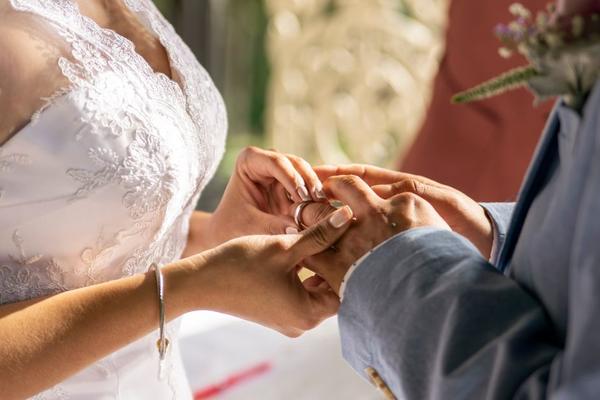

You do not need a five-minute speech to make a meaningful promise. Some of the most memorable wedding vows are only a few sentences long: a clear expression of love, a glimpse of the relationship, and a promise about the life ahead. If speaking in front of guests makes you nervous, short wedding vows can also help you stay present instead of worrying about forgetting your lines.
The aim is to say something true in words that sound like you. These examples and writing tips will help you do exactly that.
How Short Can Wedding Vows Be?
A personal vow can be as short as three or four sentences. Around 60 to 120 spoken words often feels substantial without becoming a speech, although your ideal length depends on your delivery and ceremony. Read your draft aloud and time it rather than estimating from the page. Pauses, emotion, and looking at your partner can add time.
Check with your officiant before finalising the wording. Some religious ceremonies have prescribed vows, and legal declarations or consent wording may be required depending on where you marry. Your personal promises can usually sit alongside those elements, but they do not automatically replace them.
A Simple Formula for Meaningful Short Vows
Try a three-part structure: say what you appreciate, make two specific promises, and close with a commitment. This keeps concise vows warm and complete rather than sounding like a slogan.
Start with one honest observation
Choose something distinctive about your relationship: “You make ordinary Tuesdays feel like an adventure,” or “You are the person I want beside me when plans change.” A small, recognisable detail often carries more feeling than several grand adjectives.
Promise actions, not perfection
“I promise to listen when things are difficult” is more believable than promising never to argue. Consider everyday verbs: listen, encourage, laugh, show up, learn, apologise, celebrate. Pick promises you can imagine keeping on an ordinary day, not just on your wedding day.
Finish with a clear choice
Close with a sentence such as “I choose you today, and I will keep choosing you.” You have reached a natural ending; there is no need to add another paragraph simply to make the vows seem impressive.
Short Wedding Vow Examples You Can Make Your Own
These short vow examples are starting points, not scripts you must perform exactly. Change the details and cadence so the words fit your relationship.
Simple and heartfelt
“You are my favourite person to come home to. I promise to be kind when life is stressful, to celebrate the good days with you, and to face the uncertain ones beside you. I love you, and I choose this life with you.”
Romantic without being elaborate
“Loving you has made my world feel bigger and my home feel closer. I promise to notice the little things, to be honest with you, and to keep making space for our dreams. I am so happy I get to call you my partner.”
Playful but sincere
“I promise to laugh with you, share the last slice when I can, and admit when you were right. More importantly, I promise to stand by you, listen carefully, and make our home a place where we can both be ourselves. I cannot wait for our next chapter.”
For a couple with years of shared history
“We have already learned how to face surprises, build routines, and find reasons to laugh. Today I promise to keep learning alongside you. I will value what we have made and stay curious about who we become. You are still my favourite choice.”
Make Brief Wedding Vows Feel Personal
Replace one general phrase with an image only the two of you would recognise. Maybe your partner always brings you tea before an early shift, or you got through a difficult house move by making each other laugh. You need not explain the entire backstory to guests. One detail can show the shape of your love without turning the vows into a private joke.
For example, change “You always support me” to “You listened to every practice interview, even after a long day.” Then connect that memory to a future promise: “I will give your hopes the same attention you give mine.” That small bridge between memory and commitment is what makes simple wedding vows feel genuine.
When choosing what to share, think about your ceremony wording as a whole. A private memory may belong in the vows, while a broader message may work better in a reading.
Adjust the Tone to Your Ceremony
At a formal ceremony, choose language that feels steady and timeless. For a relaxed garden wedding, conversational wording may feel more natural. If you and your partner have different speaking styles, your vows do not need identical phrasing. Agree on an approximate length and level of humour, then keep your individual voices.
For a blended family, be careful not to make promises on children’s behalf. Short wedding readings can complement personal vows without repeating the same sentiments.
How to Deliver Short Vows Without Memorising Them
Print your vows in a large, readable font or put them in a small card. Practise reading slowly, with a pause after each promise. You can mark a place to look up at your partner. Holding the card is not a failure of romance; it lets you concentrate on what you mean.
Do one test run standing up. If a sentence catches your breath, simplify it. If you stumble over a phrase twice, replace it with something you would naturally say. Give your officiant a copy, especially if they need to cue your turn. A clear wedding ceremony timeline can also make the transition into vows feel less rushed.
Frequently Asked Questions
Is it okay to have very short wedding vows?
Yes. Personal vows do not need to be long to be sincere. A few thoughtful sentences can work beautifully, provided your ceremony also includes any wording required by your officiant, faith tradition, or local marriage rules.
Should both partners write vows of the same length?
They do not have to match word for word. Agreeing on a rough range can prevent one person from delivering two sentences while the other gives a long speech. Each person should still sound like themselves.
Can I use one of these examples exactly?
You can, but changing a detail or promise makes it more meaningful. Ask yourself whether the words reflect how you actually show love. A small adjustment often turns borrowed wording into something personal.
What if I cry or forget a line?
Pause, breathe, and look at your card. Your partner and guests are there to share the moment, not judge a performance. Choose brief lines you can return to easily if emotions interrupt you.
A Few True Words Are Enough
The best short wedding vows do not try to cover everything you have been or everything you might become. They offer a recognisable picture of your love and a handful of promises you intend to live out. Keep the language natural, make room for one personal detail, and trust that speaking from the heart is enough.